
Boljun: the castle and Glagolitic heritage of the old town
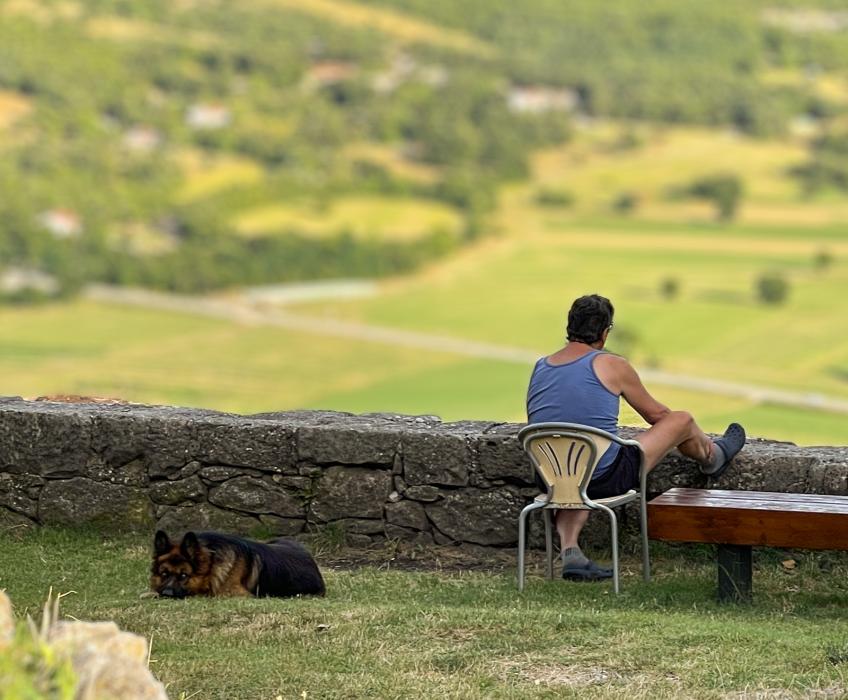
Above the Boljunčica valley, Boljun retains its castle and traces of self-government. Walk to the council loggia and St George’s Glagolitic inscription.
Restored walls and the council loggia
The castle was built and enlarged between the 11th and 17th centuries to shelter the people of Boljun and the surrounding area. From this hill, its defenders watched the routes towards Učka and Kvarner. Restoration of the outer walls, including the façade and cylindrical tower, was completed in September 2026. Work on the interior remains the next stage.
From the 15th to the end of the 17th century, Boljun had its own local leaders, known as župani, and judges. They met in the loggia. In the granary behind it, grain and other farm produce paid as dues by local people were stored for their lords. Boards for games, including nine men’s morris, are still carved into the stone council table.
A church inscription and the view from Calvary
On the rear outer wall of the parish church of St George, you can see a Glagolitic and Latin inscription dating from 1641, associated with the parish priest Bernard Velijan. There is no need to enter the church to see it.
From St George’s, follow the road towards Lupoglav for about 300 metres to the Calvary built in 1914. From that hill, you can look back at Boljun’s houses and castle above the valley.
A film location and a place for lunch
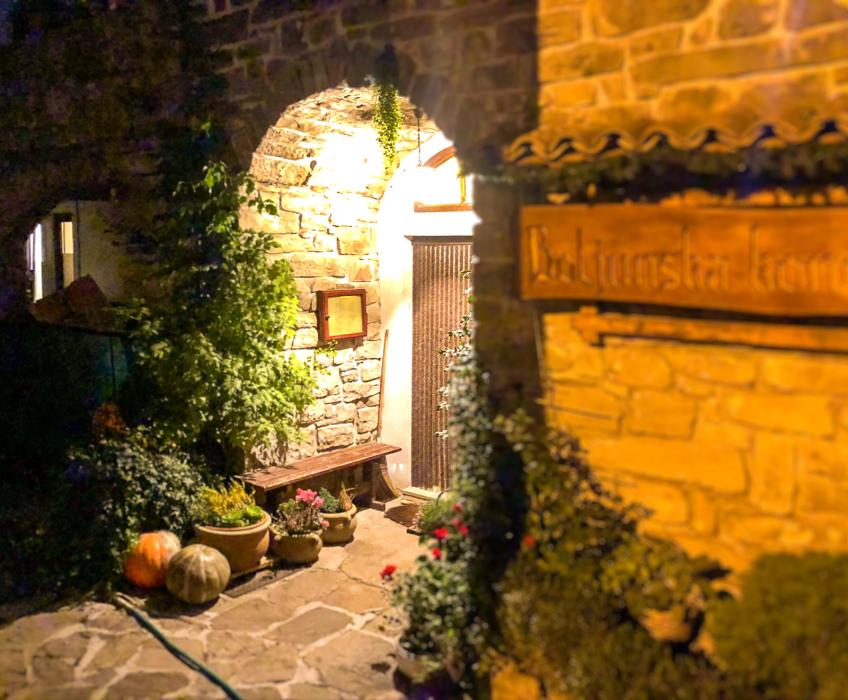
High Road to China (1983), starring Tom Selleck and Bess Armstrong, was filmed in Boljun. For a meal beside the castle’s outer walls, there is Boljunska Konoba.
Distance from Bale: 47 minutes driving
Total Rating from 0 reviews
Be the First to Leave a Review
Thank You for Your Review! It will become publicly available after verification.