
Tomislav Lovro Pavlek on putting together Bale’s jazz festival
Slaviša Srdić
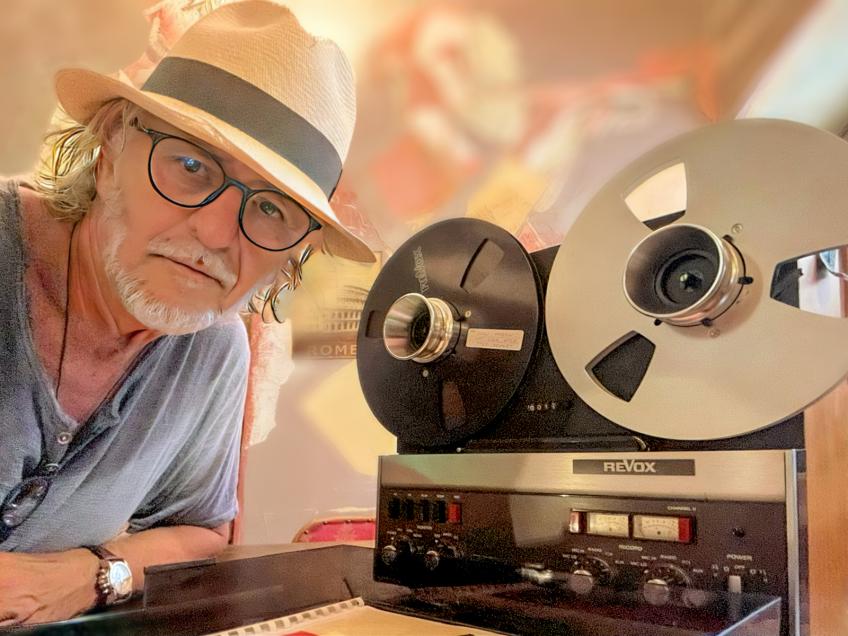
Tomislav Lovro Pavlek and his team spent nine months preparing a festival set to run for four nights in Bale. Speaking ahead of its 18th edition in 2024, he explained why he looked for the sound of club jazz when choosing the musicians.
For that edition, Pavlek announced Ratko Zjača and the return of Aleksandar Dujin and Nevena Reljin. When we asked how big a festival could get, he recalled a concert outside a church in Vela Luka. Oliver Dragojević was among the performers, and there were about two hundred people there.
How would you describe the festival’s development over its first 18 years? What were the turning points?
It’s hard to talk about how the festival has developed without touching on the wider changes going on around us, in every respect. Art has accompanied every form of human evolution and set us apart from other living things, though not enough, unfortunately. Mediocrity is eternal, just as hardened arteries are an eternal problem for Homo sapiens. It appears at about the same time as any evolutionary process begins, which is natural. I have nothing more to say about that. We are what we live. We’re part of a shared aesthetic, and all we can do is keep fighting and swimming upstream. Eighteen years is enough to say what we have to say and for people to understand what we’ve been saying. Music is communication.
What can we expect this year? Can you tell us about any special events or guests?
There are a few interesting projects this year. We chose Ratko Zjača, who is coming with a new album that won him an award and took him to number 32 on an American chart of solo guitarists. My irresistible friend Professor Dujin, who made his name playing with Đole Balašević and running his legendary jazz club in Novi Sad, and the brilliant, versatile singer Nevena Reljin are coming back to Bale for a second time because you asked for them. The festival has a surprise in store that same evening… It runs for four nights and I promise we’ll have fun. Summer’s barely begun, hasn’t it? Everyone’s invited to dress their best and help make those summer nights something to see. There’ll be classical music, jazz and joy on stage. Eighteen years ago, we started the festival to put a new idea into practice and give cultural tourism a start. That’s something our community in Bale depends on and has been working towards for a long time. We have theatre, jazz workshops, artists’ colonies and philosophy symposia. Bale is a marvel.
How do you choose the performers? What matters most to you?
We choose by instinct, with a clear idea of what fits. We want an open-air summer festival rather than a formal concert. We try to hold on to the thread that runs through jazz: bar jazz, club music, the kind of jazz you might call entertainment, which is what the people who started the American clubs at the beginning of the last century had in mind. Jazz moves you like a glass of rakija or wine. It draws you in and won’t let you go home until dawn… Plenty of styles like to put jazz in their name these days, but I prefer the honest, bare truth, as Nives Celzijus might say. I’m joking a little. Jazz either is or it isn’t. Everything else is trying, but it’s not easy to play or to be like Chet Baker. You had to live it. Kamene priče began in the same street where Chet lived in Amsterdam. At the end of the millennium it arrived in Bale from underground and from the sky at the same time. At heart, it simply is; it exists and lives without an agenda. It’s a living thing. Bale lives at 440 hertz, in A major.
How do you balance creative freedom with the demands of putting on the festival?
Putting on an open-air jazz festival is a challenge. Until the last moment you don’t know what the sky might throw at you. We work on the project for nine months, the time it takes to make a human being. Choosing the bands and the people in them is hard. You’re always weighing what the organisers can manage against what the musicians can do. The only way to hold anyone’s attention is to keep at it and do the work.
How important is the municipality’s support, and how do you work with the local authorities?
You need the support of the place you live in to take on something like this. None of the things I’ve listed would be possible without the people here and the municipality, which coordinates the community’s cultural programme. We’ve spent years building trust. I’ve come to trust the Municipality of Bale, and it’s come to trust my colleagues and me.
Who has made a difference to the festival, and what did they bring to it? How does the team work together?
The Farkaš family have been our sound engineers from day one. For years Miha and Melita have worked to give shape to ideas I’ve had and put into practice since the beginning, eighteen years ago. There are limits and there’s the creative part; we had to find a balance. We’re never all completely happy with the choices, the way things go, the weather, the money, the costs… but never mind. I’ve looked at life through a kaleidoscope and a wide-angle lens from day one. Look wide and you’ll see more, and have more room to move. Bale backed us and believed in us from the start. Edi is an interesting player. I respect him more and more as mayor, and as the years pass I understand his way of doing things better. He’s led Bale well and continues to do so. I’m not someone who has to praise those in power to get by; all my life I’ve done the opposite. I’m critical and don’t trust anybody until I see results. You’d have to be blind not to see that something good has happened here over the last twenty years…
What are the biggest challenges in organising the festival, and how do you get past them?
It makes sense to do something creative with your life, to start new projects and see them through. It’s easier to live that way.
What place does jazz have in society now, with interest in music festivals growing?
Every village now has a jazz festival or something similar. How glamorous each one is depends on money alone. A stage, a performer and an audience. What we do in Bale has nothing in common with those festivals, and I don’t mean to belittle anyone or anything. It’s all good and has a place in developing cultural tourism in Croatia, because it gives people something worth coming for. Here we live jazz. It’s found a home in our souls.
Jazz attracts a particular audience. Can a jazz festival get too big? How do you keep it true to itself and give people a reason to come as the crowds grow?
Learning to know when enough is enough should be taught in primary school. We started with the festival in Vela Luka. Oliver Dragojević performed at our festival. It all happened out in front of the church, with 200 people there. We played jazz and Oliver sang his songs, most of them chansons. Tedi, Gibo, Hauser, Matija, Elvis Stanić, Antonio Serrano, Nicolas Bearde, Etienne Mbappe, Denis Janah and maestro Damir Kukuruzović all played there… Afterwards we’d sit down at Bata’s tavern and carry on over fish and wine… Then look at today. There are 30,000 people in Vela Luka singing Oliver’s songs. We needed to find the right scale, and back then we found it.
Tags: Jazz, Concerts, Music, Bale, Istria, Festival
Total Rating from 0 reviews
Be the First to Leave a Review
Thank You for Your Review! It will become publicly available after verification.